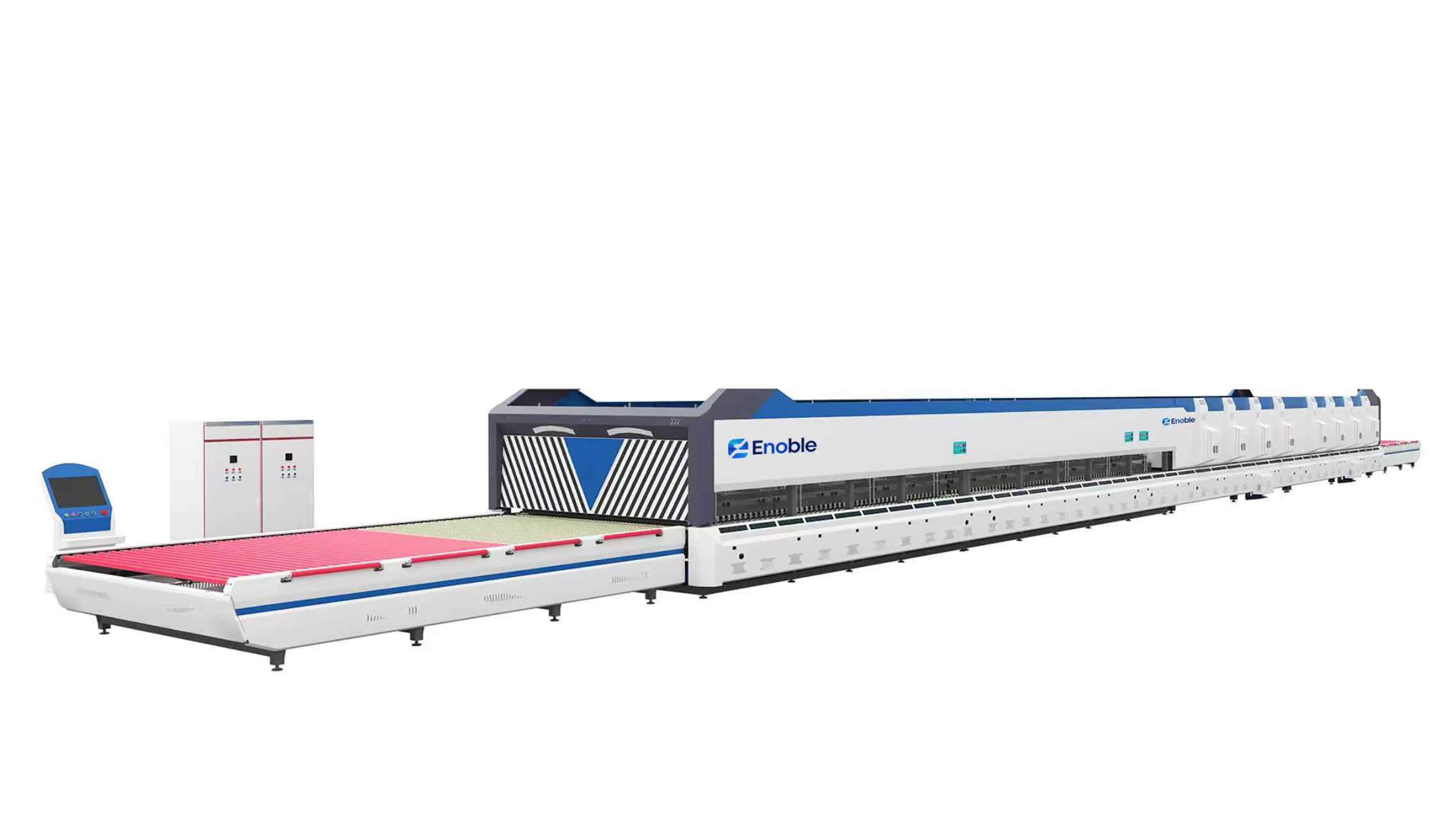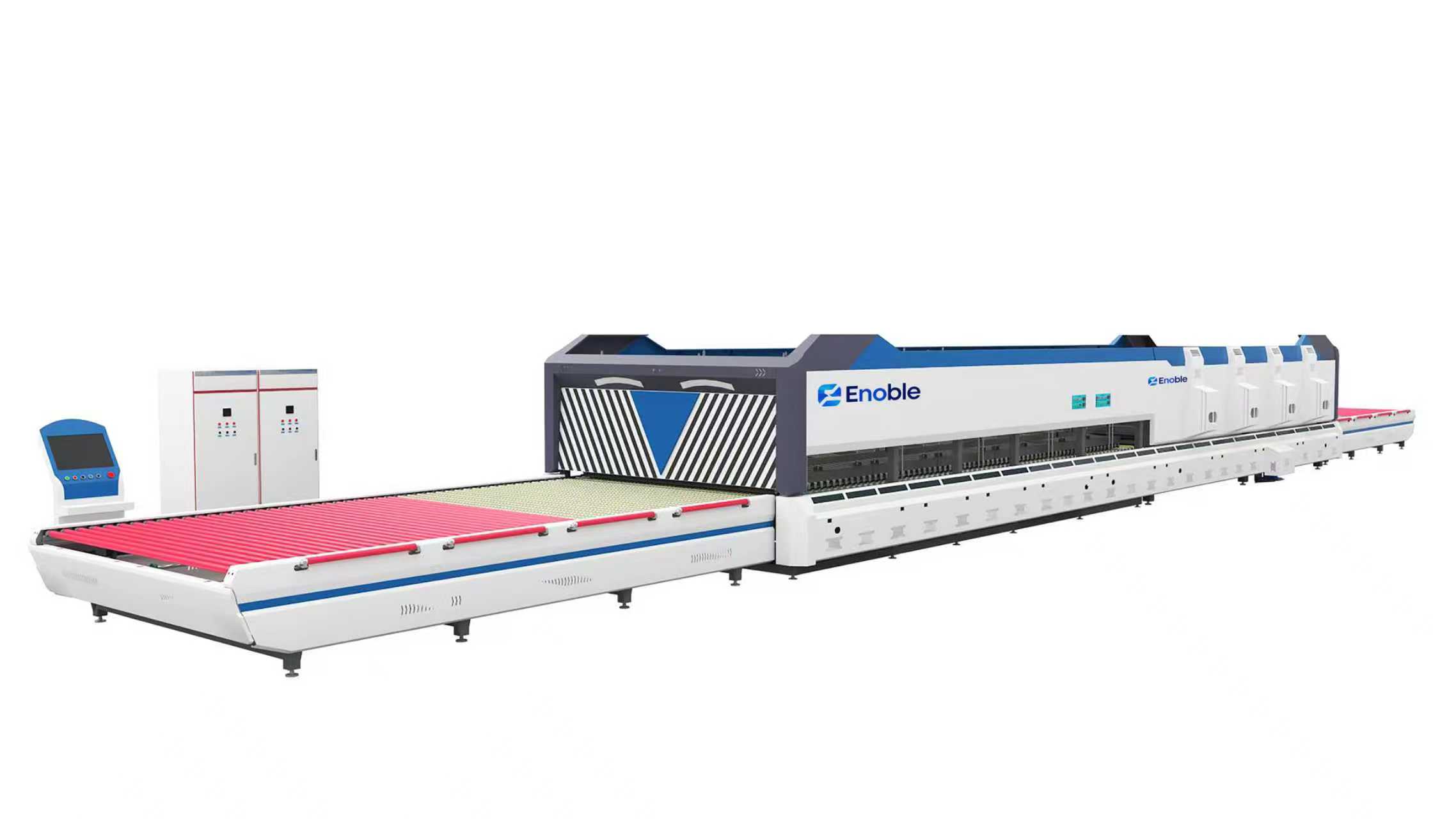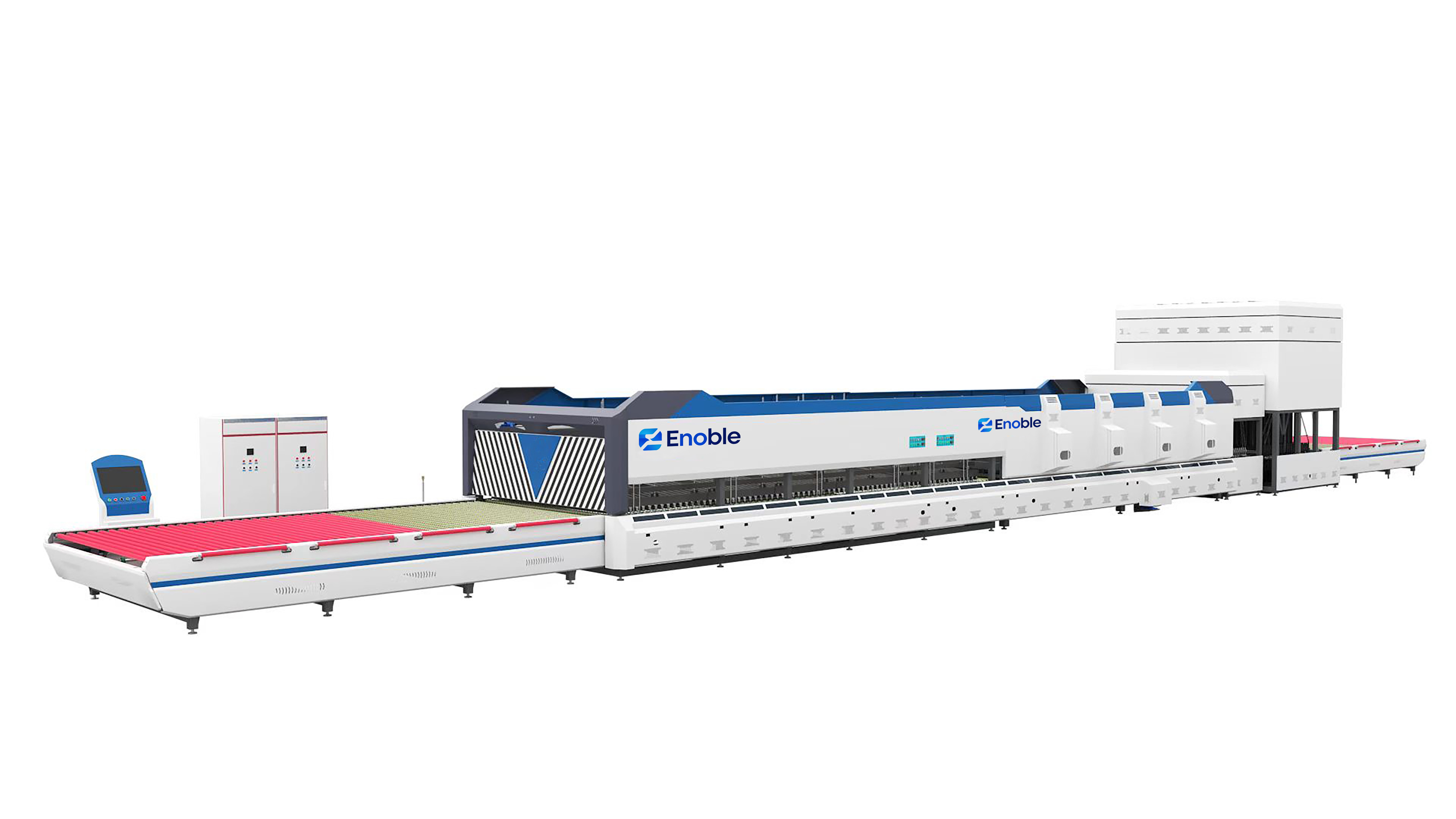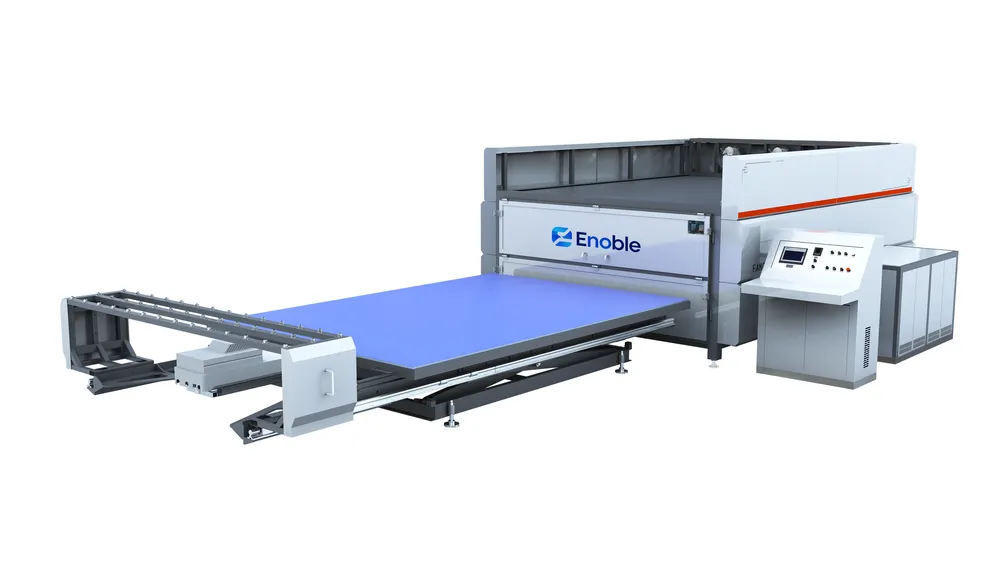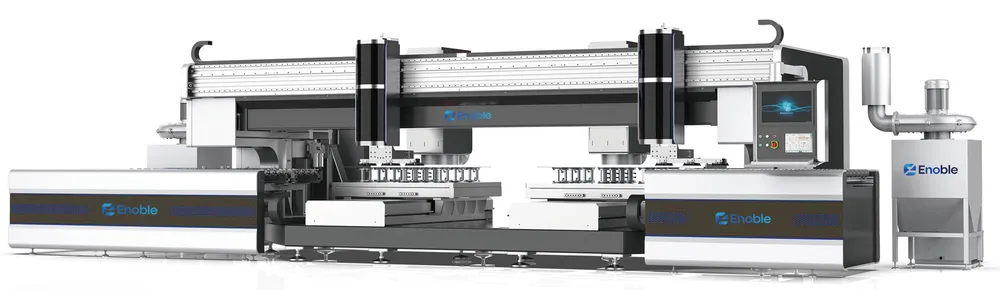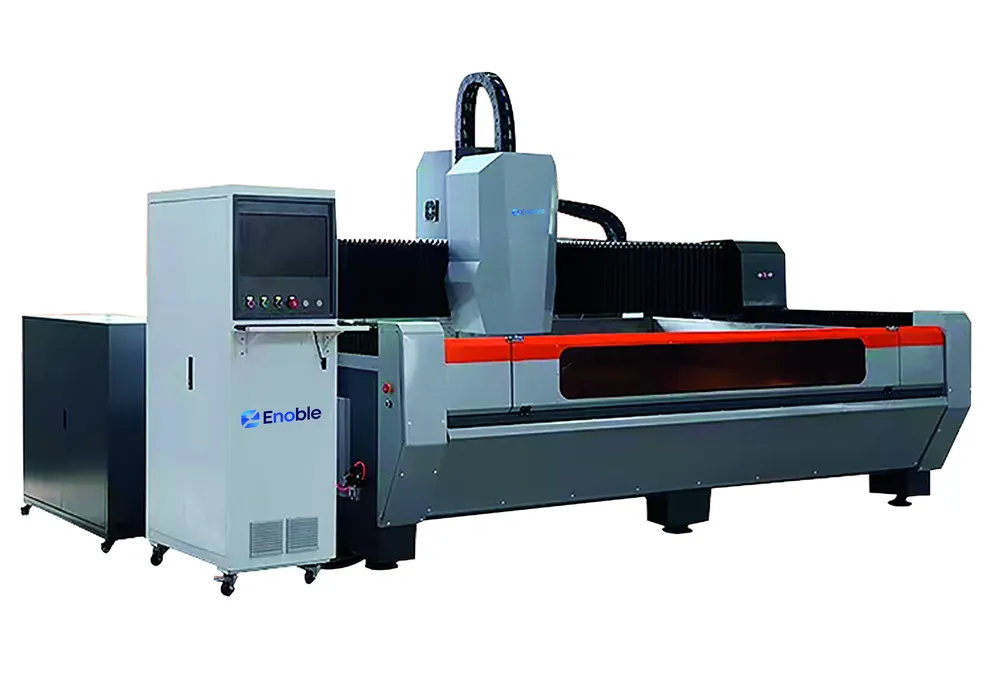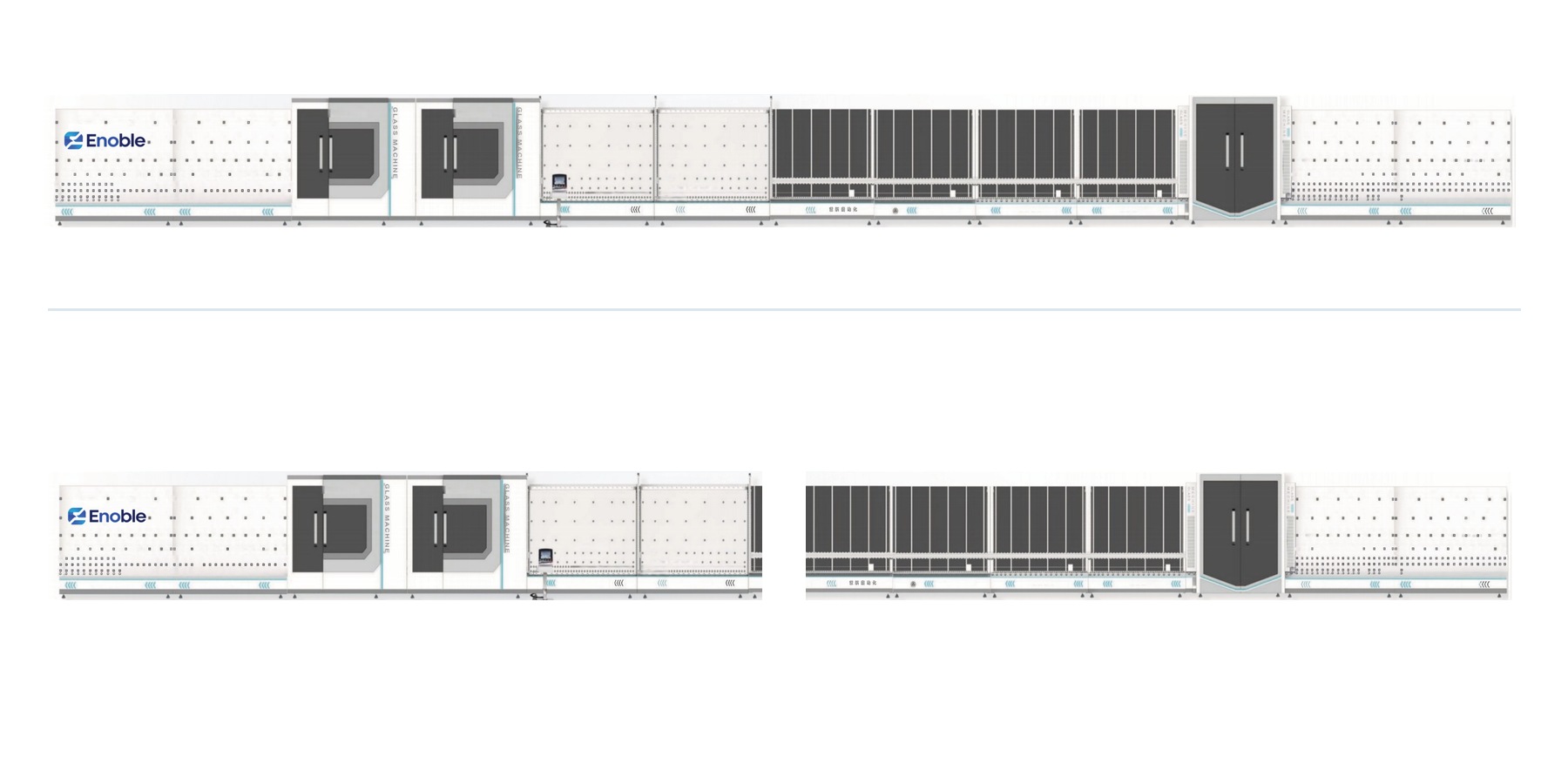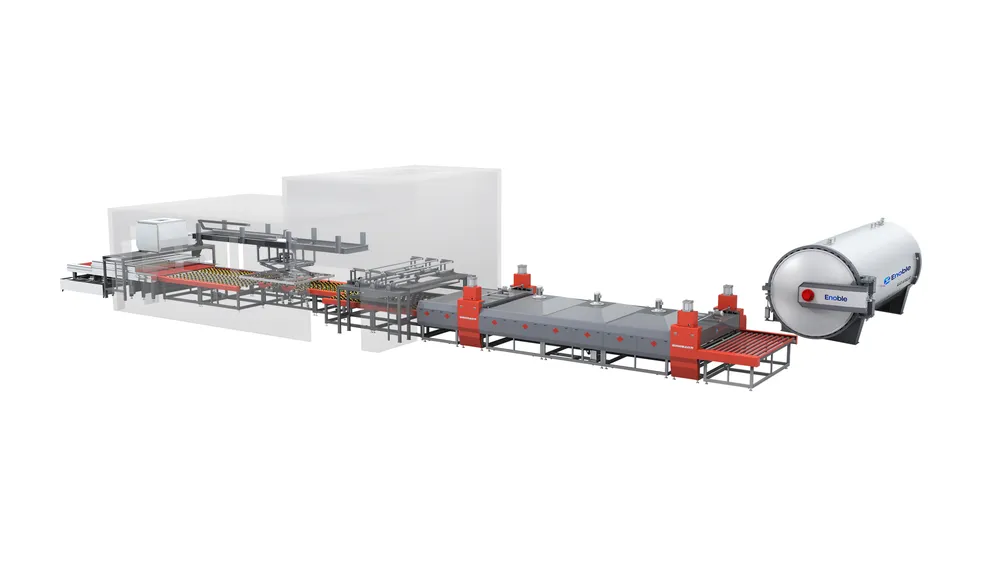
The SC-E-2436 Glass Tempering Furnace is a horizontal forced-convection line for flat tempered glass production. This standard configuration processes 4-19 mm glass and provides a maximum loading area of 2440 x 3660 mm.
The line integrates loading, zoned convection heating, a flat-tempering passing section, quenching and cooling, unloading, blower control and computerized process management. It is designed for clear, colored, screen-printed and Low-E glass, including coated glass with different heat-absorption characteristics on the two surfaces.
The tables below reproduce the supplied SC-E-2436 equipment data. Maximum glass size varies with thickness, so buyers should compare the thickness-specific limits rather than using the loading area alone.
| Parameter | SC-E-2436 Standard Configuration |
|---|---|
| Equipment Type | Horizontal forced-convection flat glass tempering furnace with passing section |
| Glass Thickness | 4-19 mm |
| Maximum Loading Area | 2440 x 3660 mm |
| Minimum Loading Area | 300 x 100 mm |
| Heating Power | 640 kW |
| Blower Power | 250 kW + 75 kW, with frequency converter; final design to be confirmed |
| Practical Power | 627 kW |
| Installed Power | 965 kW |
| Minimum Power-Supply Capacity | 630 kVA |
| Ceramic Roller Diameter | 85 mm |
| Roller Distance | 100-120 mm |
| Glass Thickness | Maximum Glass Size | Selection Note |
|---|---|---|
| 4 mm | 2200 x 1200 mm | Use this limit when planning production of 4 mm tempered glass. |
| 5 mm | 2440 x 1800 mm | Use this limit for 5 mm glass. |
| 6-19 mm | 2440 x 3660 mm | Full listed loading size is available from 6 mm upward. |
| Glass Thickness | Production Capacity | Comprehensive Energy Consumption |
|---|---|---|
| 4 mm | 20-22 loads/hour | ≤2 kWh/m² |
| 5 mm | 16-18 loads/hour | ≤3 kWh/m² |
| 6 mm | 12-14 loads/hour | ≤4 kWh/m² |
| 8 mm | 8-10 loads/hour | ≤5 kWh/m² |
| 10 mm | 6-8 loads/hour | ≤6 kWh/m² |
| 12 mm | 4.5-6 loads/hour | ≤7 kWh/m² |
| 15 mm | 4-5 loads/hour | ≤8 kWh/m² |
| 19 mm | 3-3.5 loads/hour | ≤10 kWh/m² |
The SC-E-2436 uses coordinated motion, heating and air-control systems to maintain repeatable flat-glass tempering conditions from loading through unloading.
Rubber rollers, an encoder and dual photoelectric sensors record glass length and synchronize transfer into the heating section.
Upper and lower heating zones use independent temperature-control loops. Four convection blowers combine convection and radiation heating for coated and Low-E glass.
Upper and lower quenches close to the required gap, while synchronized rollers transfer heated glass for tempering and reciprocating cooling.
Frequency-converter blower starting, an air collector and separately adjustable upper/lower quench air help match airflow to the glass specification.
Recipes can store temperatures, heating time, blowing time, air pressure, transfer speed, oscillation speed and quench height.
The control system provides operating status, input/output checks, fault alarms and records to support troubleshooting and maintenance.
| Component | Listed Brand / Origin |
|---|---|
| PLC and extension units | OMRON |
| Transmission frequency converter | Schneider |
| Fan frequency converter | INVT |
| AC contactor | SIEMENS |
| Ceramic roller | Comrola |
| Pneumatic components | AirTAC |
Machine in Action
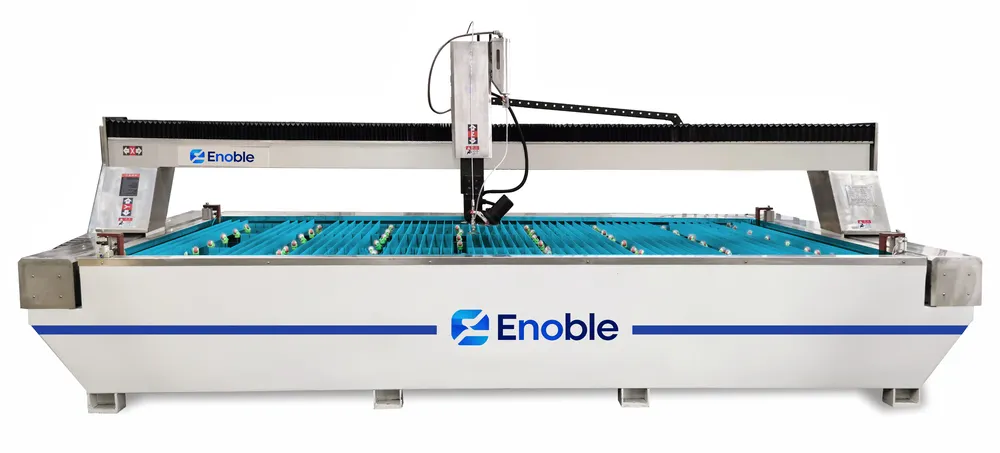
See selected Enoble Glass factory and equipment reference videos related to machine structure, intelligent glass manufacturing and export handling. The current public video list does not include a clearly titled tempering furnace demo, so these videos are presented as factory references rather than furnace process demonstrations.


The supplied data lists single-, double- and triple-silver Low-E glass, with emissivity down to E=0.015.
Suitable for flat safety-glass production from clear or colored float glass within the model limits.
Supports single-side screen-printed float glass when the correct tempering recipe is confirmed.
Used for doors, windows, facade panels, partitions, furniture and other flat tempered-glass products.
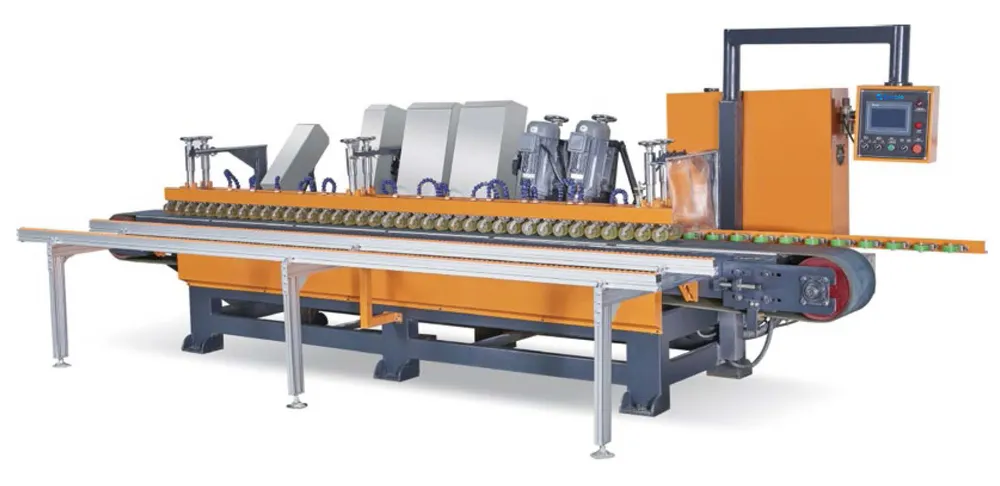
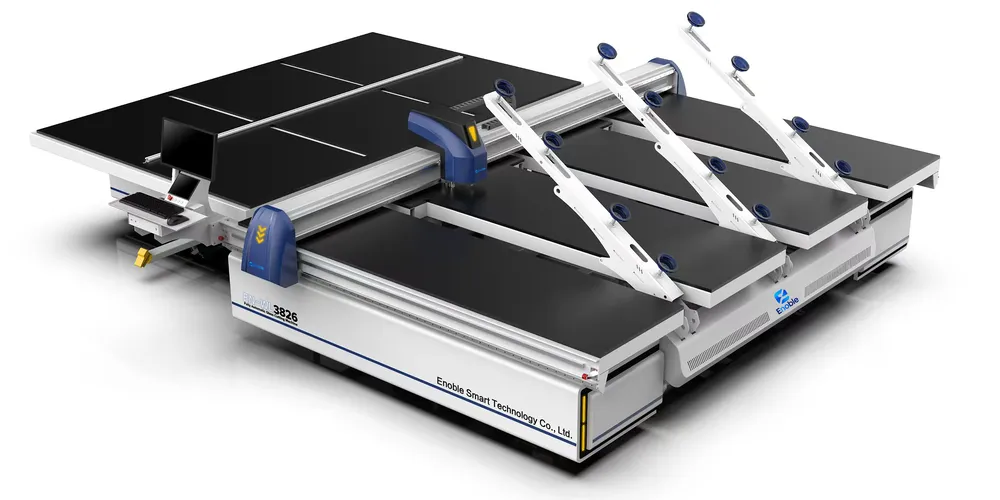
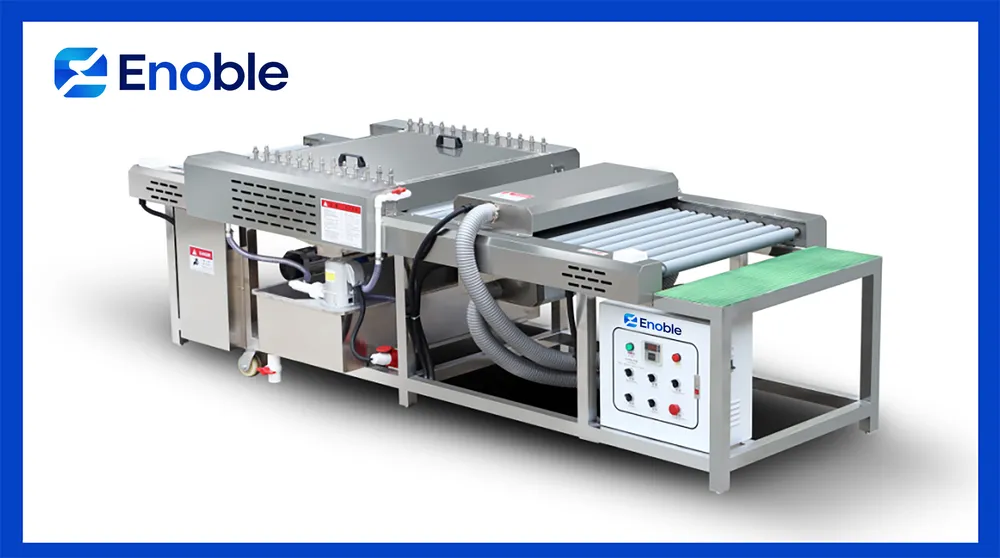
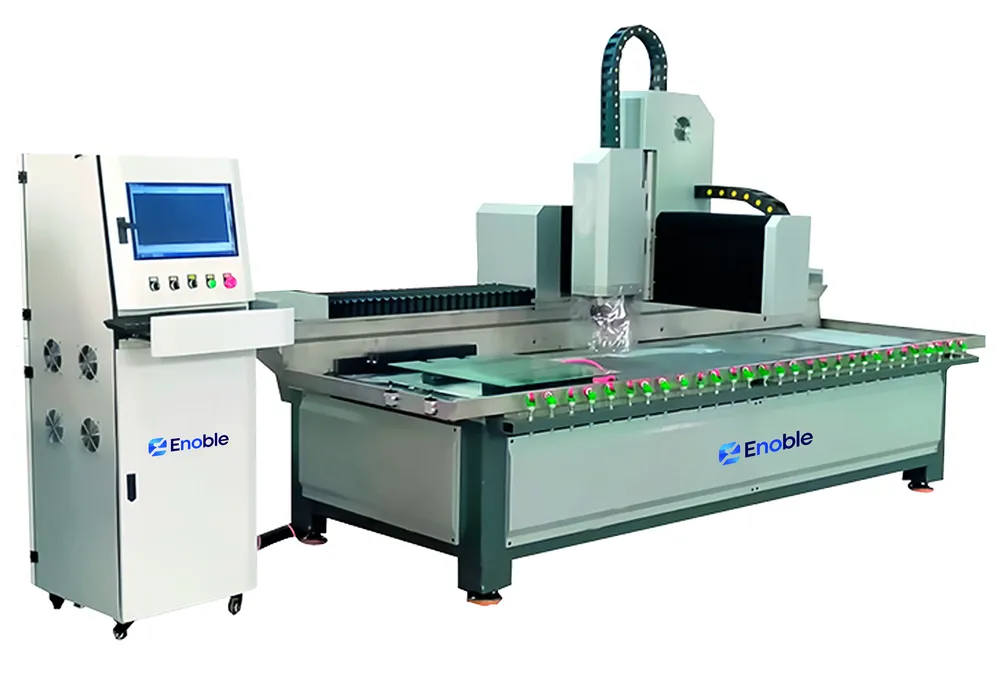
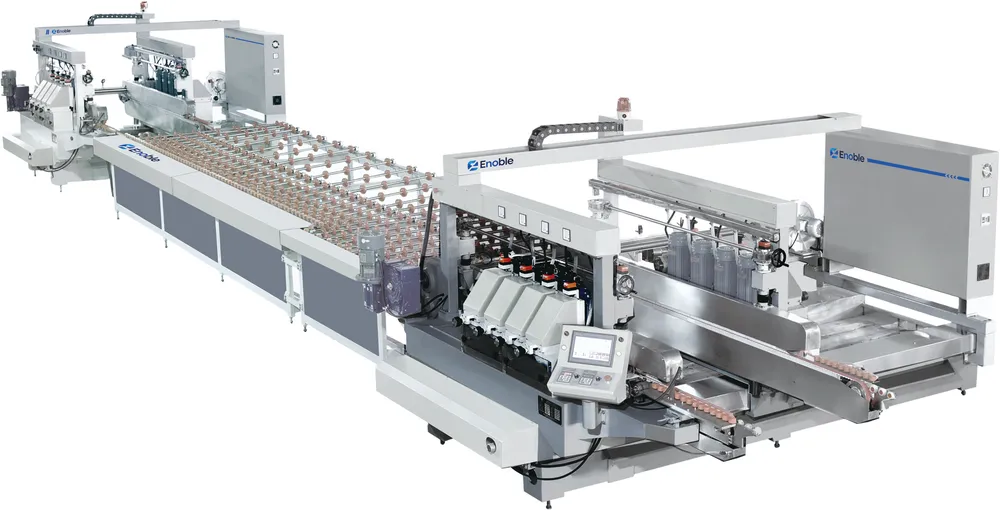
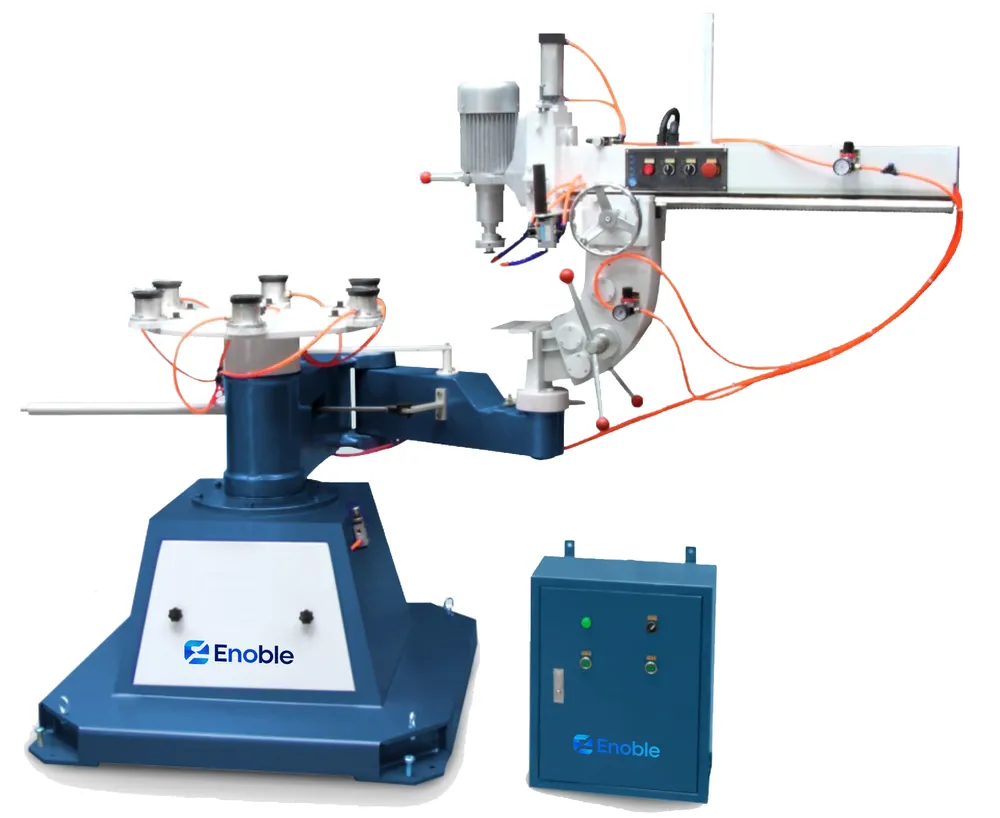
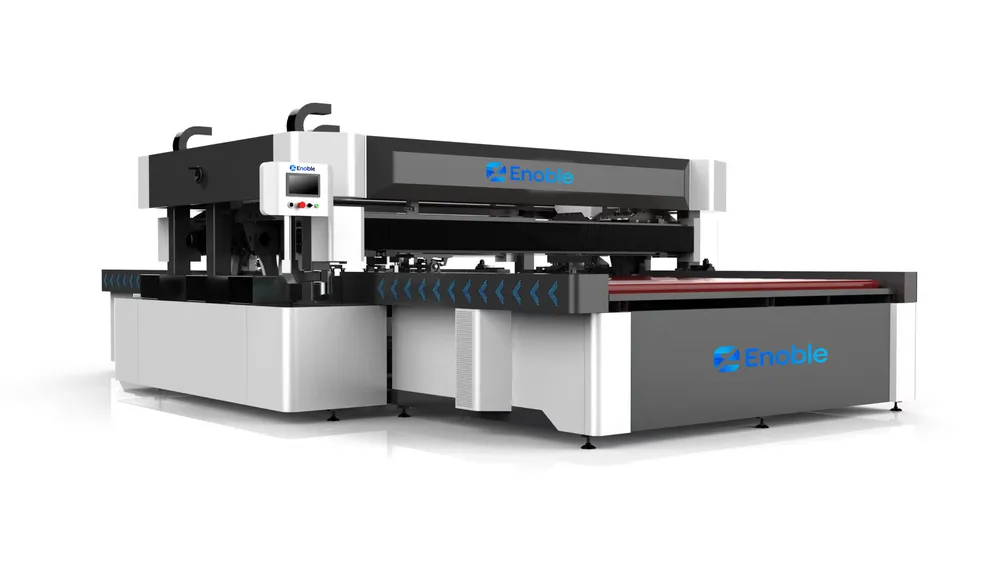
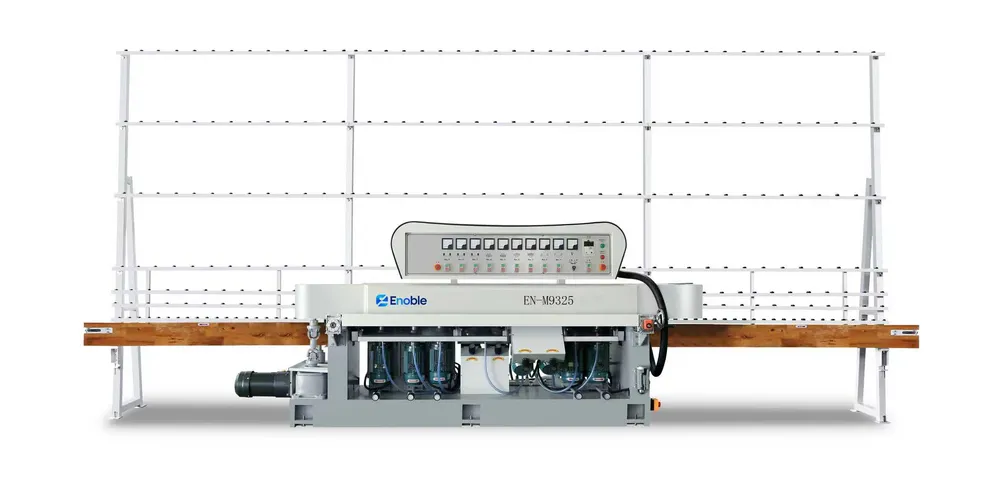
For upstream preparation, compare the CNC glass cutting machine, four-side glass edging machine and horizontal glass washing machine.
| Quality Item | Listed Target |
|---|---|
| Reference standard | GB/T 9963-2008 for toughened glass |
| 5 mm particle count | ≥40 particles within 50 x 50 mm² |
| Bow deformation | ≤0.05% |
| Waveform distortion | ≤0.03% |
| Flatness | ≤0.2% |
| Comprehensive yield | ≥98% |
| Requirement | Supplied Reference |
|---|---|
| Foundation smoothness | ±20 mm |
| Concrete thickness | ≥150 mm |
| Ground pressure reference | 7 kg/cm² |
| Compressed-air use | 0.3 m³/min |
| Air-storage tank | 1.6-2 m³ |
| Minimum power-supply capacity | 630 kVA |
The supplied standard configuration covers 4-19 mm flat glass.
The limit is 2200 x 1200 mm for 4 mm glass, 2440 x 1800 mm for 5 mm glass and 2440 x 3660 mm for 6-19 mm glass.
Yes. The supplied data lists single-, double- and triple-silver Low-E glass, clear float glass, colored float glass and single-side screen-printed glass.
The reference lists 965 kW installed power, 627 kW practical power and a minimum power-supply capacity of 630 kVA. Final electrical design must be confirmed before installation.